

Decarbonization
Stakeholder challenges
In line with global long-term goals to become to climate neutral, the main objective of large industrial and energy companies is reduce GHG emissions. It is a main requirement of numerous stakeholders to focus on the ESG performance, as well.
The challenge of CCUS
Based on recent studies, an exponential increase of carbon prices could be also possible in the next decades.3 As costs of carbon dioxide emissions are rapidly growing, there is an increasing need for solutions through which carbon dioxide can be captured, transported, stored, or utilized.
There is a broad consensus about the need for CCUS cost reduction, as well. It is because current technologies are expensive, for example, because of the need for underground storage or the absorption and desorption phases in case of post-combustion technologies, which could generate at least 15-20% of total costs.4
New opportunities induced by technology development
We developed a system without desorption, through which the deployment costs of CCUS could be reduced. Our CCU technology development could accelerate the utilization of the power-to-gas and the power-to-liquid applications.
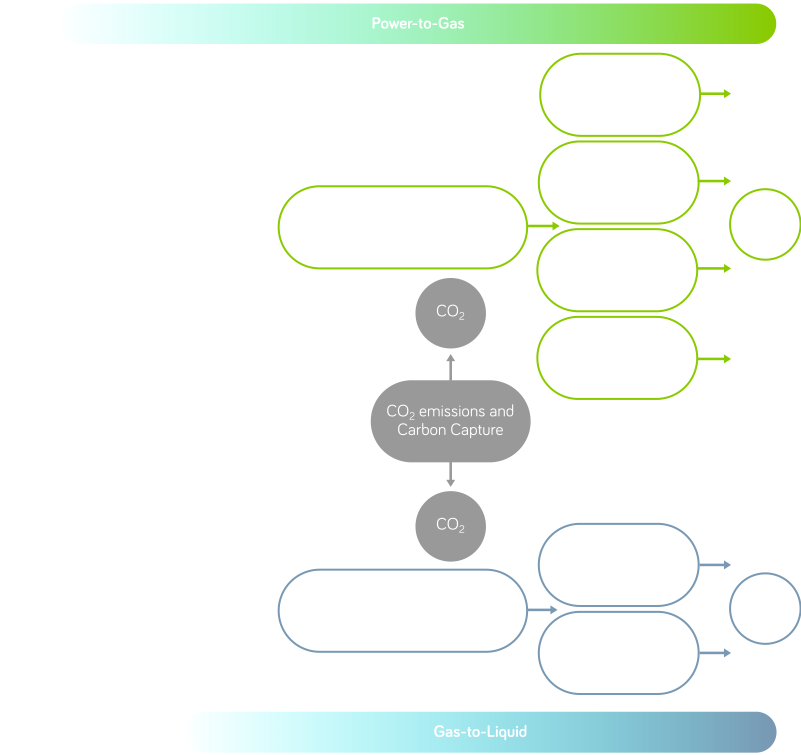
(source: Csedő et al., 20215)
3 https://doi.org/10.1038/s41467-021-22211-2
4 https://doi.org/10.1016/j.apenergy.2021.116893
5 https://doi.org/10.3390/su13169194

Hydrogen Economy
Green hydrogen production
Acceleration towards the hydrogen economy would be favorable from the aspect of climate-neutrality. The more hydrogen is produced, the higher the need will be to store or utilize it efficiently, especially because there are safety limits to the injection of hydrogen into the natural gas grid or it requires a new infrastructure.
Green hydrogen utilization
Clean SNG production from green hydrogen could be also advantageous. Based on our analysis of European biomethanation project descriptions, the most important term is hydrogen which reinforces that biomethanation can function as a chemical method for hydrogen storing and/or utilization “tool” in the form of methane (SNG) in high amounts and for a long term, or it can be a middle step towards utilization in other forms (e.g., LNG).
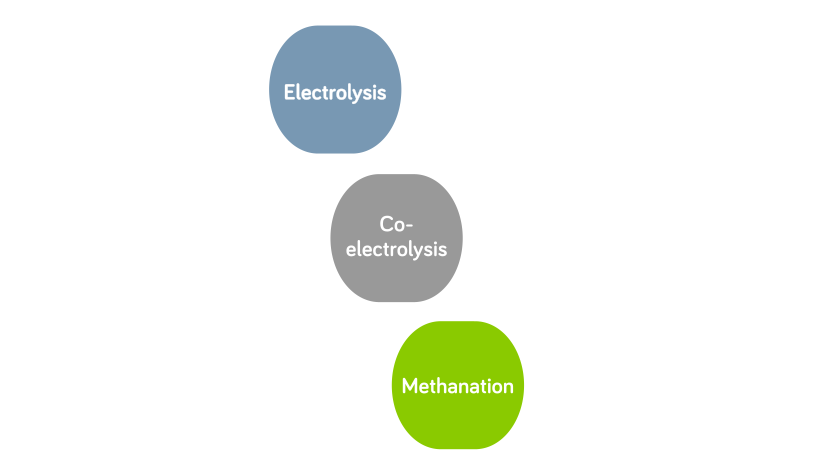
(Hidalgo & Martín-Marroquín, 2020 1 )
Economic opportunities
P2G could mitigate the financial problems of growing natural gas prices. While P2G, and especially power-to-methane would be a feasible option to reduce the purchased NG with locally produced (clean) SNG, up until now, P2G plants with biological methanation could usually be implemented next to agricultural biogas plants or larger wastewater treatment plants with biogas plants to convert the CO2 int CH4 with microorganisms, thus, to produce biomethane from biogas. By our technological systems, industrial companies could also produce valuable, clean SNG from flue gas.